Inside a Live Device-Code Phishing Panel
An exposed phishing panel shows how device-code lures send victims to Microsoft's real login page to capture OAuth tokens. Timeline, IOCs and defenses.
Research library
We dig into real phishing pages, malware, scripts, and the infrastructure running underneath them, then turn what we find into something a reader can actually use. New case studies go up as investigations wrap and we've stripped out anything sensitive.
Latest publication
6 published reports

An exposed phishing panel shows how device-code lures send victims to Microsoft's real login page to capture OAuth tokens. Timeline, IOCs and defenses.

Static reversing of a modular Win64 backdoor with deterministic DuckDNS discovery, separate control and module channels, Registry-backed modules and custom PE mapping.

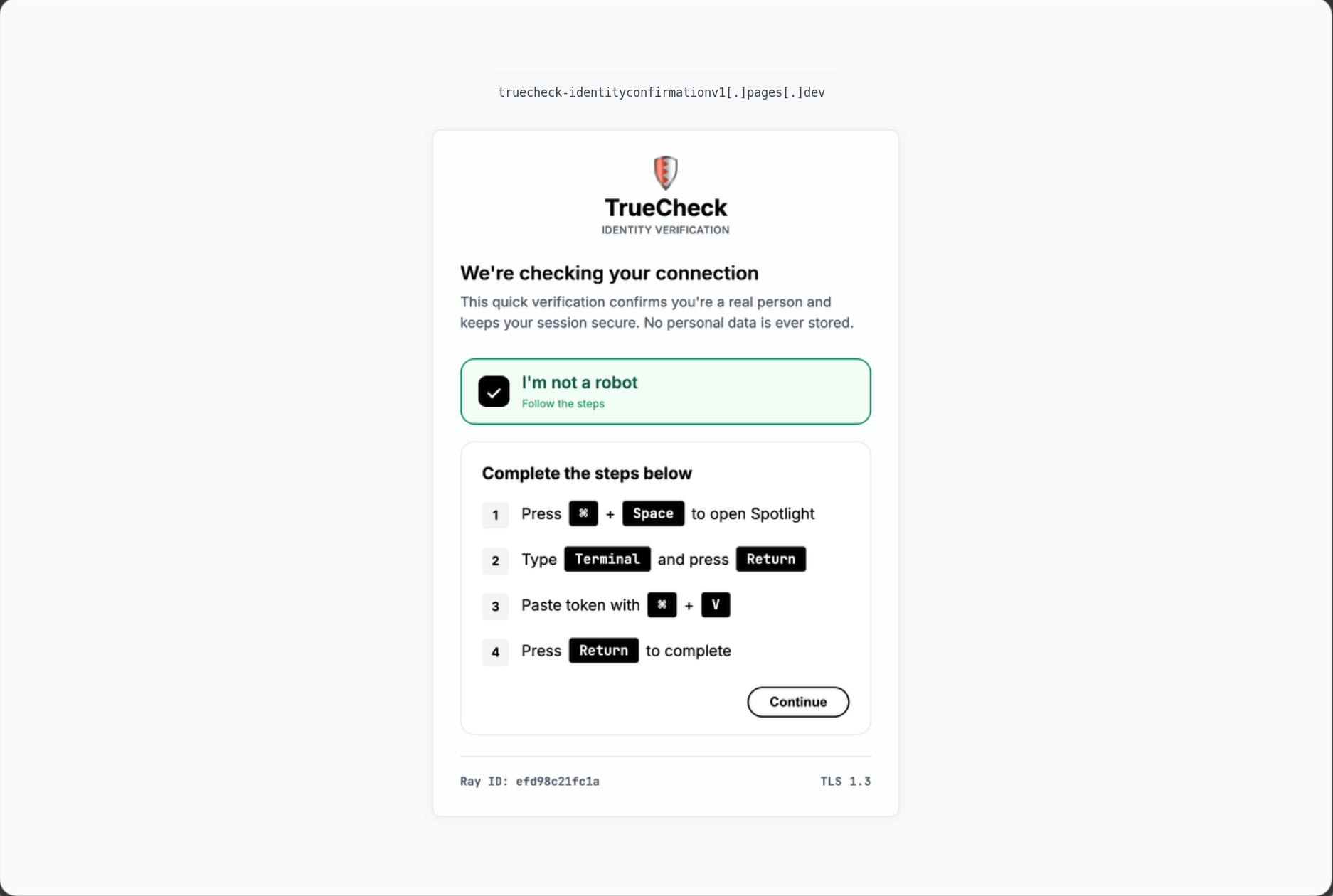
A fake verification page, a persistent AppleScript backdoor and two NITRO2 stealer modules. A reconstruction with explicit evidence boundaries and defanged indicators.

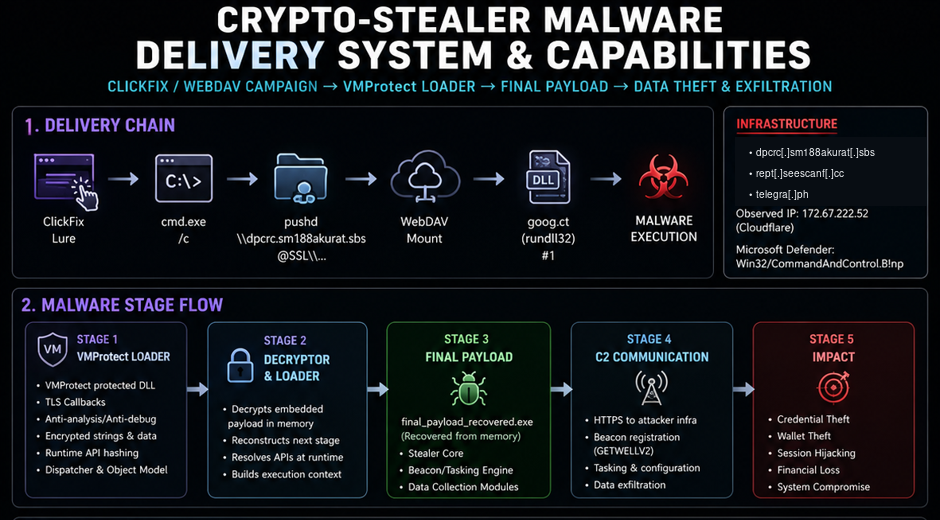
A cross-platform reconstruction of GETWELL: WebDAV and Amatera on Windows, AppleScript and an AMOS-derived stealer on macOS, joined by shared operational design.

A compromised ThaiCham WordPress site served a TermFix lure that led through PowerShell, a Polygon resolver and a signed loader to Vidar Stealer v2.

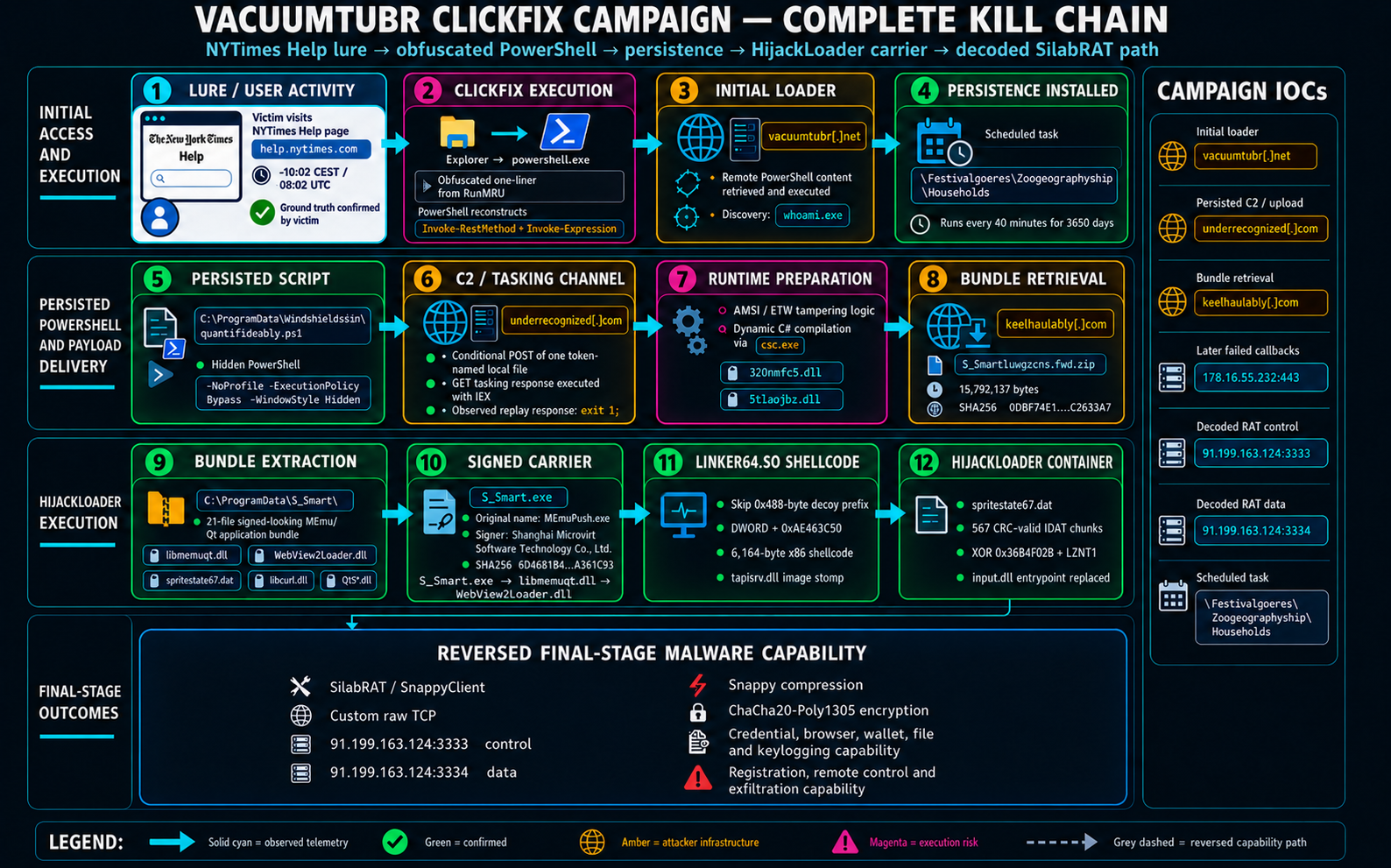
A reconstruction of the vacuumtubr ClickFix chain, from a trusted Help-page lure through PowerShell persistence, linker64.so shellcode recovery, HijackLoader and a recovered SilabRAT payload.
Publishing standard
Articles publish attacker domains, URLs, public addresses, hashes, smart-contract addresses and local artifacts that support detection and reversing.
For the human-facing decisions behind these campaigns, begin with modern phishing awareness. Our editorial methodology explains analysis, sanitization and corrections.